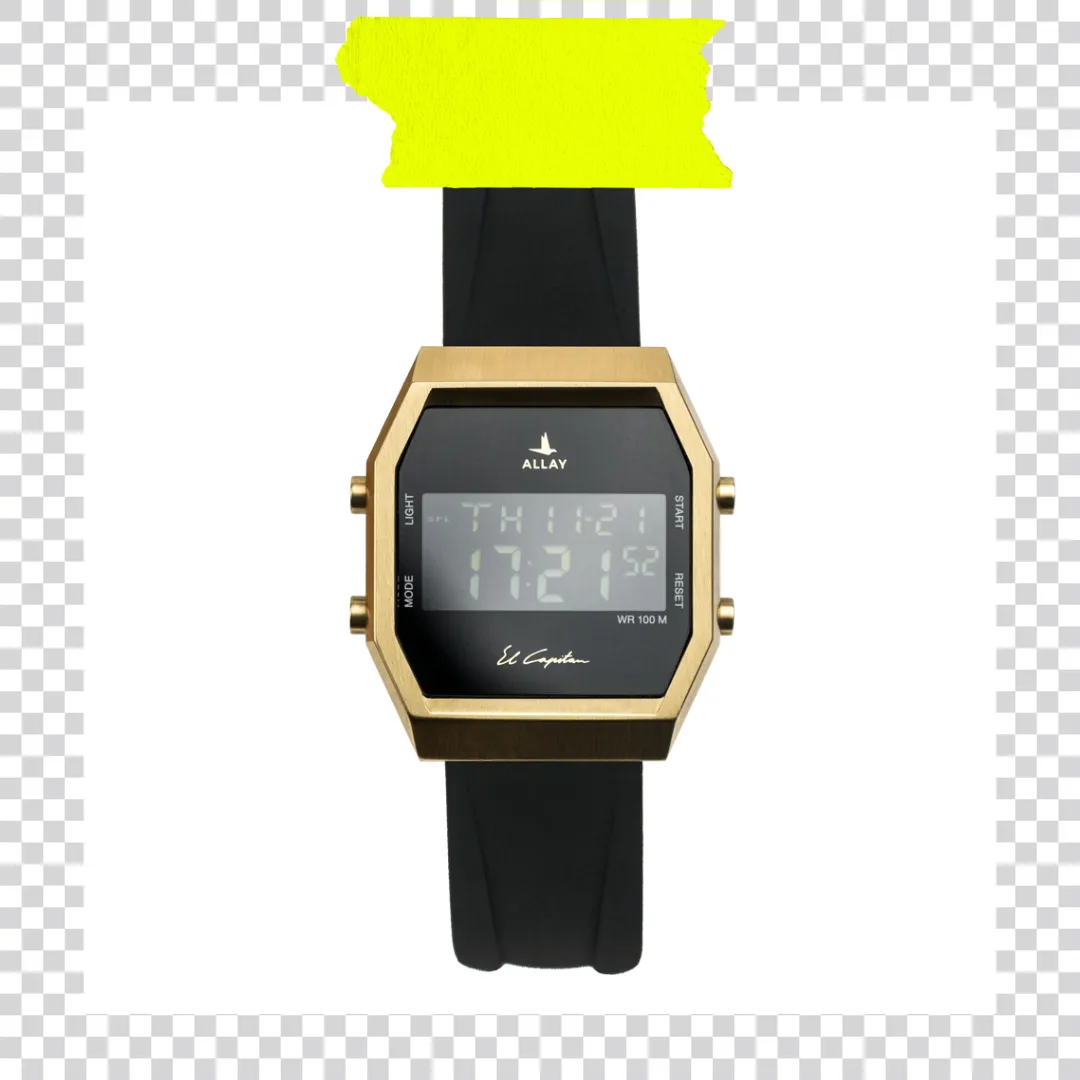
ALLAY El Capitan
Designing El Capitan: A Minimalist Timepiece Born from Precision and Purpose
- Type
- project
- Year
- File
- aljosha-insta-images_1-1.jpg
When we launched ALLAY, our vision was clear: to design a watch that was more than an accessory. We wanted to create a product that embodied clarity, function, and quiet confidence — a timepiece that felt timeless in both its presence and its performance. That product became El Capitan.
As founder, general manager, and creative director, I oversaw the entire development cycle of El Capitan — from early concept and design philosophy through CAD construction, prototyping, production management, and final launch. This post offers a behind-the-scenes look at how the product came to life and what it taught me about building physical products with purpose.
The Concept: Subtraction as Identity
At the heart of the El Capitan was a simple design principle: less, but better. Influenced by architectural clarity and the elegance of digital precision, I aimed to create a watch that eschewed ornamentation in favor of material honesty and functional beauty.
Rather than chase trends, I looked to durable ideas: subtle geometry, tactile balance, and refined proportions. The result is a minimalist silhouette, clean dial layout, and a case designed for both visual lightness and physical durability.
From Idea to Prototype: CAD, Materials, and Modelling
The design process began with CAD-based exploration, iterating through form factors and dimensions to find the right balance between presence and subtlety. I modeled each component with precision using Vectorworks and Blender, allowing us to visualize proportions and simulate finishes before physical prototyping.
Materiality played a central role. I selected 316L stainless steel for its balance of strength and weight, paired with sapphire crystal for durability. The strap — durable polyurethane — was chosen not just for comfort, but for how it performs under harsh conditions.
Prototyping and Refinement
Rapid prototyping was critical. We used 3D-printed mockups to test ergonomics and fit, followed by fully functional prototypes produced with our manufacturing partner. Each iteration refined tolerances, weight distribution, and component integration.
One of the key challenges was aligning design integrity with production feasibility. I worked closely with suppliers to ensure that details like the cpsuhers, case back engraving, and dial visability met both aesthetic and technical standards — without compromising efficiency or cost.
Independent Launch and Production Management
Bringing the El Capitan to market required more than just design skills — it meant building a brand from the ground up. I took over product photography, copywriting, packaging design, and the digital launch strategy. I also established a lean production pipeline with strict quality controls, resulting in a customer return rate of under 2% — well below the industry average.
I handled web design, SEO, and customer communication in-house, reducing outsourcing costs by over 70%. This end-to-end approach gave me granular insight into how every design decision impacts business performance, customer perception, and operational logistics.
The Result: A Watch Built to Last
The El Capitan has been described by customers as “understated confidence” and “design without distraction.” To me, that’s the highest compliment. It’s a product that doesn’t shout, but endures — and that’s what ALLAY was ultimately about: design that doesn’t demand attention, but earns it.
Looking Ahead
The success of El Capitan laid the foundation for future ALLAY designs — including our follow-up piece, Terra Incognita Mark I, which pushes the boundaries of contrast, surface treatment, and concept storytelling.
More importantly, the El Capitan project taught me the value of owning the process, thinking holistically, and designing with discipline. These principles continue to inform my work as a design strategist and product developer across industries.